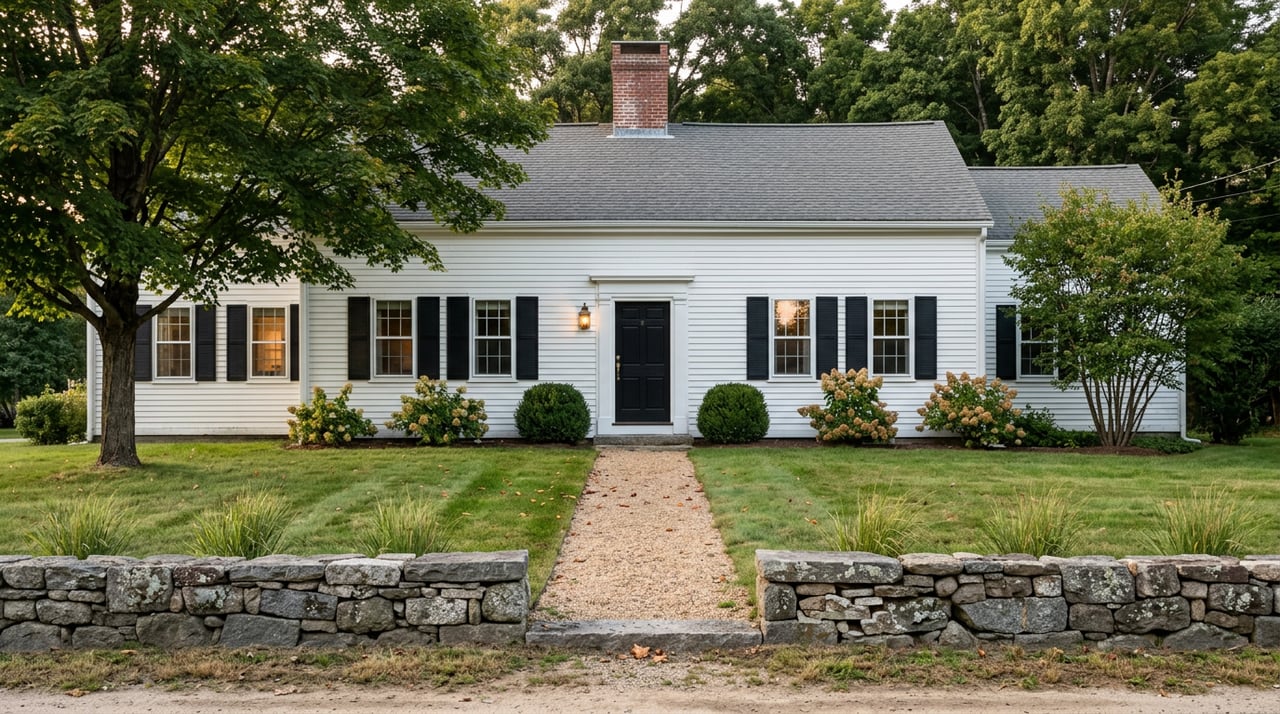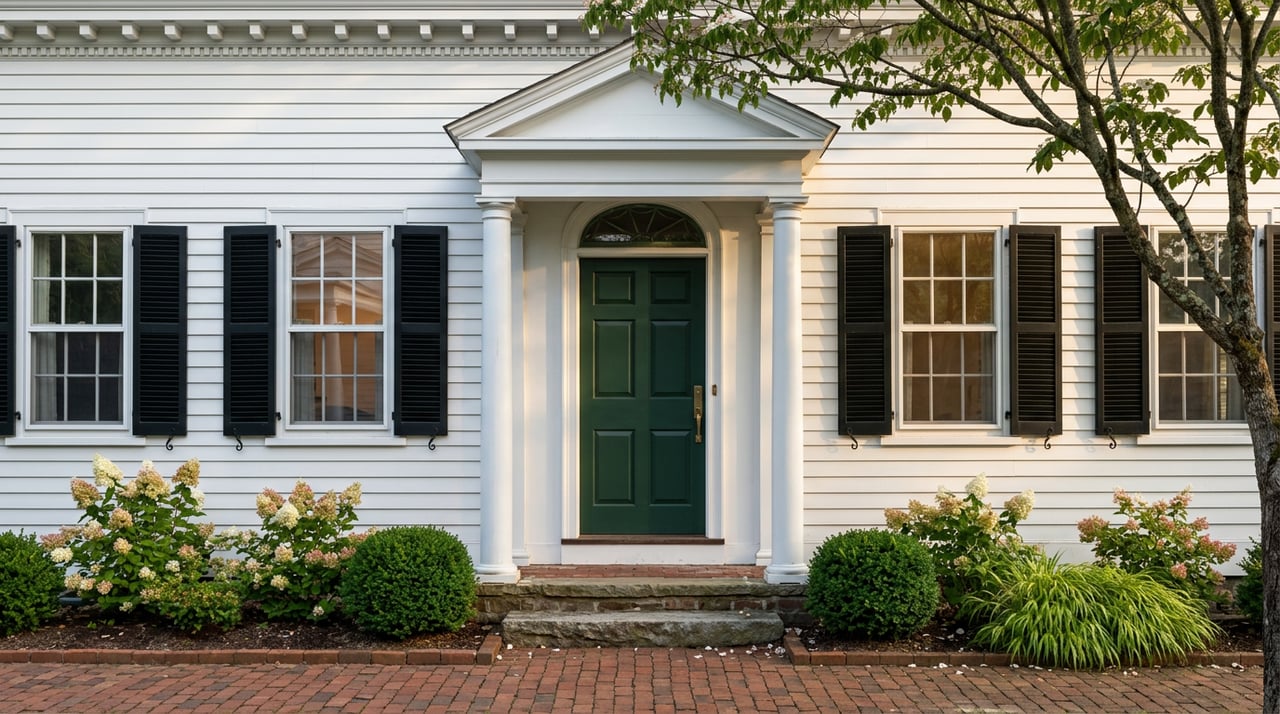
Portsmouth's citywide median list price sat at roughly $849K in July 2026, with a median 34 days on market, according to Movoto's PrimeMLS-fed dashboard. Downtown ran tighter still, with the Downtown Portsmouth submarket clearing at 22 days last August against 43 the year before. Underneath those numbers lives a very specific inventory problem. More than 1,500 homes in the city were built before 1900, and 135 of those predate 1800. A meaningful share of what trades in any given month is a Federal, Georgian, or Greek Revival home whose transaction friction has almost nothing to do with the market and almost everything to do with three documents most sellers never open until the wrong moment.
Those three documents are the New Hampshire seller disclosure form, the inspection report, and the Historic District Commission application. Read together, they explain why two Portsmouth homes at the same list price can produce net proceeds that differ by five figures at closing. Read separately, or read late, they explain why a re-trade shows up on day nine of due diligence.
The Disclosure Gap Comes First
New Hampshire is one of the few states that does not require a broad written material-defect disclosure. RSA 477:4-d asks the seller to disclose, in writing and before an offer, only three things: the private water supply, the private sewage system, and the insulation. If the seller has no information on any of those, the absence itself must be disclosed. That is the entire statutory floor.
The floor is narrow enough that most Portsmouth sellers reasonably assume the rest is buyer-beware. It is not, and here is where the transaction actually turns. RSA 331-A:25-b puts an affirmative duty on the licensee, meaning the listing agent, to disclose to prospective buyers any material physical, regulatory, mechanical, or on-site environmental condition of which the agent has actual knowledge. If the seller mentions knob-and-tube in the attic during a walk-through, or if the agent sees a sagging bathroom floor while measuring for photos, that information leaves the seller's private knowledge and enters the buyer's file.
For a pre-1900 Portsmouth home, this is where the NHAR Property Disclosure, Residential Only form does most of its real work. It is not required by statute, but it is standard local practice, and it functions as a controlled channel for the seller to state what is known once, in writing, rather than have it surface in a screenshot of a text message during renegotiation.
What The Inspector Actually Writes Up
The buyer's inspector on a Portsmouth Federal or Georgian is not looking for the same things the inspector on a 2005 colonial in Bedford is looking for. The report almost always includes some combination of the following, and each one is a line item a listing agent should have priced into strategy before the sign goes up:
- Foundation movement. Stone and brick foundations that have shifted over two centuries. Uneven floors are normal at this age. The question inspectors flag is whether the movement is historic and stable or active. A structural engineer's letter, ordered before listing, is often cheaper than the concession a buyer will ask for without one.
- Knob-and-tube wiring. Common in un-renovated pre-1900 stock. Many carriers will not write a policy on active knob-and-tube, which makes this a financing issue, not just a safety issue.
- Galvanized supply lines and gravity-fed heating. Both still present in homes that have never been comprehensively updated. Replacement is typically the single largest capital line for a historic-home buyer.
- Lead paint. Present in essentially every pre-1978 home. The NH Preservation Alliance notes that roughly a third of childhood lead poisonings in the state each year trace to renovation exposure, and the EPA Renovation, Repair, and Painting rule requires a certified contractor whenever a project disturbs more than six square feet of interior or twenty square feet of exterior lead paint.
- Asbestos. Common on duct wrap and pipe insulation in homes built before the 1980s.
- Radon. New Hampshire's granite geology produces higher baseline radon levels than most of the country. The EPA action threshold is 4.0 pCi/L. No state law requires mitigation, but a passive stack or fan retrofit is standard negotiation territory on almost every Portsmouth deal. Free test kits are available through the NH Department of Health and Human Services.
None of these findings are dealbreakers on their own. Together, on a pre-listing basis, they define whether the seller enters negotiations with a strategy or reacts to one.
The HDC Question Sellers Answer Too Late
The single most misunderstood variable in a Portsmouth historic sale is which historic district the property sits in. There are two, they are governed by different bodies, and only one of them affects what a seller can actually change before closing.
| District | What it is | What it requires of the owner |
|---|---|---|
| Portsmouth Local Historic District | City-level district administered by the Historic District Commission (HDC) | Exterior changes including windows, siding, roofing material, additions, and demolition require HDC approval before work begins |
| Portsmouth Downtown National Historic District | National Register district listed in June 2017, administered by the National Park Service framework | Recognition and eligibility for certain federal preservation incentives; does not by itself restrict what a private owner can change |
The practical implication is straightforward. A seller inside the Local district who wants to swap original wood windows for vinyl before listing to improve energy-efficiency talking points cannot do that without HDC review, and vinyl is generally not approved. A seller inside only the National district can. Confusing the two costs sellers weeks and, occasionally, the listing window they were trying to hit.
Pre-listing repair scope in the Local district is therefore not a design decision. It is a calendar decision. Painters like KR Painting who are EPA Lead-Safe Certified book the New England exterior season heavily, and hand-brushing on lead-safe prep is slower than spray application on a newer home. Period-restoration contractors like Persson Construction plan around HDC hearing schedules. If the seller wants a repainted facade and refreshed trim before photography, that conversation starts months before the target list date, not weeks.
The listing price on a Portsmouth historic home is set less by the comps than by the honest answer to a single question: how much of the inspection report is a seller willing to address before the buyer sees it, and how much is priced into the ask.
Pricing The Repair Scope Into The Listing
Portsmouth's 2026 pace has been quick enough to make sellers optimistic. The Duston Leddy market feed showed average sale price near $1.00M in the Jun 20 to Jul 20 2026 window with average days on market down 52.3% period-over-period and sale price averaging 2.5% higher relative to asking. Redfin's December 2025 citywide median sale of $875K was up 4.2% year over year. Those numbers reward well-prepared listings and punish the ones that surprise a buyer at inspection.
For a pre-1900 home, being well-prepared usually means three moves. First, complete the NHAR disclosure with the seller's actual knowledge before the first showing, including anything already known about wiring, plumbing, insulation, or past mitigation. Second, order a pre-listing radon test and, in some cases, a structural engineer's opinion on the foundation, so the number in the buyer's inspection report is not the first number the seller sees. Third, decide before pricing which repairs are in scope under HDC review and which have to be represented as buyer projects rather than seller concessions.
Total NH seller costs typically run 6 to 10% of sale price once commission, transfer taxes, title, attorney fees, and prorations settle out. Buyer inspection contingencies commonly run 7 to 14 days. On a $900K Portsmouth historic sale, the difference between a clean close and a $25K re-trade is almost always something the seller could have named in writing on day one.
A Short FAQ
Does a National Register listing restrict what I can change on my own house? On its own, no. The Portsmouth Downtown National Historic District, listed to the National Register in June 2017, is recognition, not regulation. The restrictions that affect exterior scope come from the city's separate Local Historic District through the HDC.
Do I have to mitigate radon before selling? No New Hampshire or federal law requires mitigation, even at elevated readings. Most Portsmouth deals treat mitigation as a negotiated item during due diligence. A pre-listing test lets the seller decide whether to install a system as part of prep or to price the risk into the ask.
Can I sell "as-is" and skip the disclosure? Selling as-is signals the seller is not doing repairs. It does not release the seller or the listing agent from the disclosure duties that already apply, including the agent's affirmative duty under RSA 331-A:25-b to disclose material conditions the agent actually knows about.
How does the HB 631 zoning change affect my historic home? HB 631 took effect July 1, 2026 and requires municipalities including Portsmouth to permit multifamily and mixed-use development by right on commercially zoned parcels. That reshapes the downtown pipeline, but it does not touch the Local Historic District's review authority over residential exteriors.
When You Are Ready To Price The Move
A pre-1900 Portsmouth home is not a harder sale than a newer one. It is a different sale, and it rewards preparation in a way that a 2005 build does not. The disclosure form, the inspection report, and the HDC calendar are the three levers. Pulled in the right order, they set a listing price the market will meet. Pulled in the wrong order, they set a re-trade.
If you are thinking about listing a historic Portsmouth home in the next two seasons, or evaluating an offer on one you already own, The Good Life Real Estate Group will walk the property with you, map the disclosure and HDC scope before the sign goes up, and help you price the repair decisions rather than react to them. Contact Us when you are ready to start that conversation.